A First Concert, Heard One Layer at a Time
A first-concert listening plan helps you follow melody, rhythm, and the room, so you can stay with a live performance without musical training.
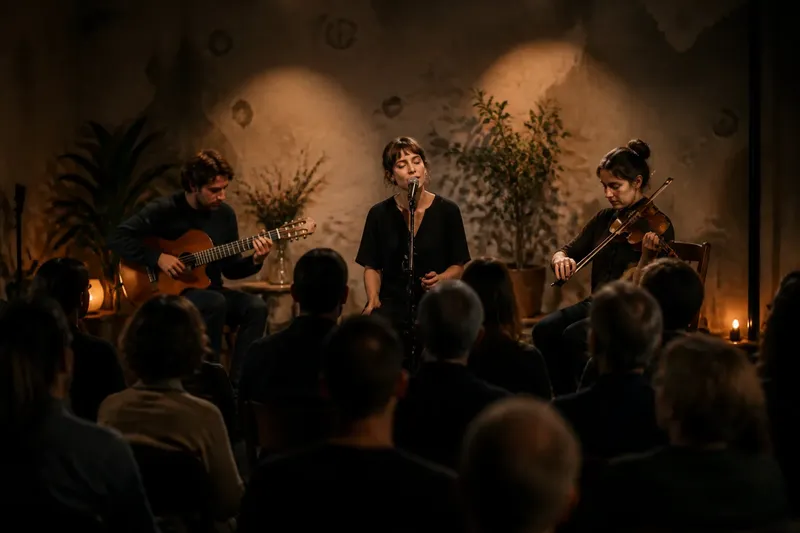
A first-concert listening plan works best when it gives you a way into the performance without turning the music into a puzzle. Follow how the ensemble changes its sound, then let your attention settle wherever the live performance feels most vivid.
You do not need to recognize instruments or sit perfectly still. Think of the plan as a theater seat with a clear view: it offers a useful perspective, but the performance is larger than any one angle.
Follow how performers shape a phrase
Instead of tracking a single melody, listen for the choices that make a phrase feel complete: a held note, a sudden cut-off, a breath, or a shift from one performer to another. These gestures reveal how the musicians shape time together, even when you cannot name the notes.
Notice how one sound prompts another. A singer may leave space for a guitar response; a violinist may sustain a note while the rest of the ensemble changes beneath it. The point is not to decode a conversation but to hear where the performers make room, answer, or press forward.
Hear the ensemble make decisions together
Live music lets you see and hear coordination as it happens. Watch for a shared cue, such as a glance, a breath, or a hand movement, then listen for the sound that follows. A conductor may give a clear signal, while a small group may rely on subtle gestures between players.
Listen for changes in balance as well. One instrument may step forward while others soften, or the full ensemble may gather around a solo line. These shifts can make the same musical idea feel intimate, forceful, or suspended without changing its basic shape.
Notice how a live performance differs from a fixed recording
A recording presents a version that has already been shaped and preserved. At a concert, the timing and balance unfold in front of you. A pause may last longer than you expected, or a phrase may gather energy as the performers respond to one another.
Stay open to small variations rather than judging them against an imagined ideal. The musicians may alter an arrangement, stretch a transition, or let a quiet moment breathe. Those choices are part of this performance, not necessarily signs that anything has gone wrong.
What should you listen for at your first concert?
Do I need to know the music beforehand?
No. Familiarity can help you recognize a returning passage, but an unfamiliar performance still offers clear changes in volume, texture, and timing. Begin with whichever sound or gesture holds your attention.
What if I cannot identify the instruments?
You can follow what the sounds do rather than naming their sources. Notice which sound begins a phrase, which one supports it, and how the ensemble changes when one part becomes more prominent.
Is it all right to watch the performers?
Yes, if watching helps you understand how the group coordinates. You can also close your eyes briefly during a passage, but there is no need to treat either approach as the correct way to listen.
What if I miss a moment?
Let the next clear change bring you back: a new entrance, a pause, or a shift in the ensemble’s balance. Trying to reconstruct what you missed can pull your attention away from what is happening now.
How can you carry a useful observation home?
Say you attend a small concert with a singer, guitar, and violin. You notice the singer take a breath before the final line, the guitarist soften as the violin holds a note, and the group wait together before the applause begins. Those observations give you a specific memory of how the performers shaped that moment, without requiring a review or musical vocabulary.
After the concert, keep one detail you can describe plainly: a pause that changed the mood, a cue you saw, or a sound that moved from one performer to another. A first-concert listening plan is most useful when it leaves that kind of personal observation behind—and leaves enough room for the next performance to surprise you.